China Uses Political Pressure to Disrupt International Aviation
FIJI NEWSWORLD
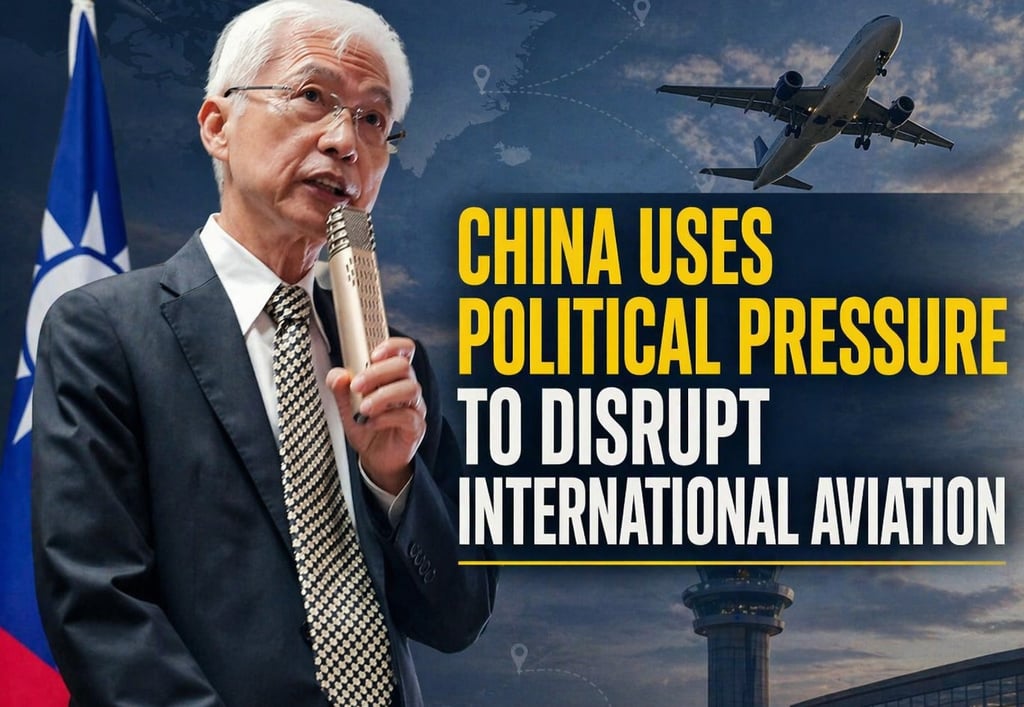
Taiwan’s Ambassador to Fiji has warned that China is using political pressure to influence other countries, following the cancellation of President Lai Ching-te’s planned visit to Eswatini.
The visit was cancelled after several African nations with close ties to China declined or delayed overflight clearance for the presidential aircraft, effectively blocking the route and raising safety and operational concerns.
Speaking in Suva, Ambassador Chow said Taiwan believes external political influence played a role in the unusual developments.
“The Government of Taiwan considers these developments highly unusual compared to normal international aviation practices,” he said.
The ambassador pointed to the actions of Seychelles, Mauritius and Madagascar, which did not grant or delayed the necessary approvals, creating uncertainty around the flight path.
While Taiwan ultimately cancelled the trip, citing safety concerns, Ambassador Chow made it clear that the issue goes beyond logistics.
“We assess that external political pressure, most likely from the People’s Republic of China, may have influenced these outcomes,” he said.
He warned that such developments risk undermining the neutrality of civil aviation, which is traditionally governed by predictable and established international protocols.
“Civil aviation should operate on neutrality and predictability. Overflight permissions are part of an established international system and should not be politicised," Ambassador Chow said.
According to Taiwan, the decision to cancel the visit was made after assessing the uncertainty surrounding flight approvals, with safety taking priority.
“The Government of Taiwan made this decision after careful assessment of flight safety and operational feasibility,” he said.
However, the ambassador stressed that the broader implications are significant, warning that the use of technical systems for political purposes could have far-reaching consequences.
“If such practices continue, aviation operations may become less predictable, safety margins could be affected, and trust in international aviation systems may erode,” he said.
He added that the issue is not limited to Taiwan alone but affects the integrity of global aviation.
“This is not only about one visit. It concerns the integrity of the international aviation system,” Ambassador Chow said.
Duavata News (Fiji) PTE LIMITED © 2024
☏ 3317438
📧 editor@duavata.news