FCCC Slammed for “Faking Consultations”
FIJI NEWSTOP STORIES
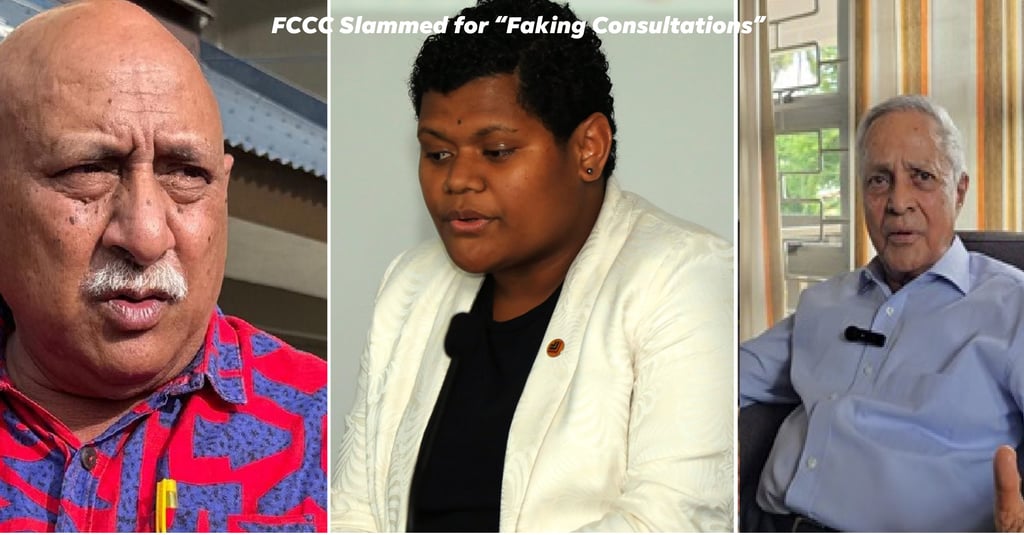
The Fijian Competition and Consumer Commission (FCCC) is facing mounting criticism from political parties over what they describe as misleading and ineffective public consultations on proposed electricity tariff increases.
The People's Alliance Party (PAP) has raised serious concerns following reports from Labasa and Nadi, where members of the public were allegedly denied the opportunity to ask questions or express their views during consultation sessions.
According to PAP General Secretary Mr Sila Balawa, more than 100 people turned up at the Labasa Civic Centre after being informed that a public consultation would take place. However, attendees were instead asked to write down their names and collect free calendars, with no opportunity for discussion on the tariff increase.
“This was not a consultation,” Balawa said, quoting Labasa farmer Dewan Chand. “People were simply told that prices would go up.”
Similar concerns were raised in Nadi, where the President of the Nadi Chamber of Commerce and Industry reportedly described the consultation process as misleading. PAP said the fact that both ordinary citizens and business leaders were voicing the same complaints showed that the consultation process was fundamentally flawed.
“A real consultation means listening to people,” Balawa said. “It means giving them a chance to speak, ask questions, and understand how decisions will affect their lives. What we are seeing now looks like a box-ticking exercise.”
PAP stressed that electricity is an essential service and that any increase directly affects families, farmers, small businesses, and the overall cost of living. While acknowledging the independence of the FCCC, the party said the Commission must remember that it was established to protect consumers and ensure the public is properly informed.
Meanwhile, the Fiji Labour Party (FLP) has gone further, branding the consultations a “farce” and accusing the FCCC of attempting to legitimise a decision that had already been made.
Labour Leader Mahendra Chaudhry said the Labasa consultation was deliberately structured to prevent criticism, with FCCC representatives allegedly refusing to answer questions or allow opposing views.
“People were told, ‘We are not here to answer questions. We are here to give information,” Chaudhry said. “That is not consultation — it is deception.”
Chaudhry also criticised the conditions under which the session was held, claiming it took place in a small tent at the Civic Centre car park with insufficient seating for the large crowd that turned up in extreme heat.
The Labour Party maintains that the FCCC failed to follow the law by approving tariff increases before conducting public consultations. Chaudhry said an earlier application by Energy Fiji Limited had already been rejected following consultations and could not be relied upon to justify new increases.
“People have a right to ask questions and express opinions on decisions that will affect the cost of all goods and services,” Chaudhry warned. “That right must be genuinely respected.”
Both parties have called on the FCCC to halt what they describe as a flawed process and to conduct proper, meaningful consultations before any decision on electricity tariff increases is made.
We have sent questions to FCCC.
Duavata News (Fiji) PTE LIMITED © 2024
☏ 3317438
📧 editor@duavata.news