Fijians Unknowingly Eating Unhygienic Food
FIJI NEWS
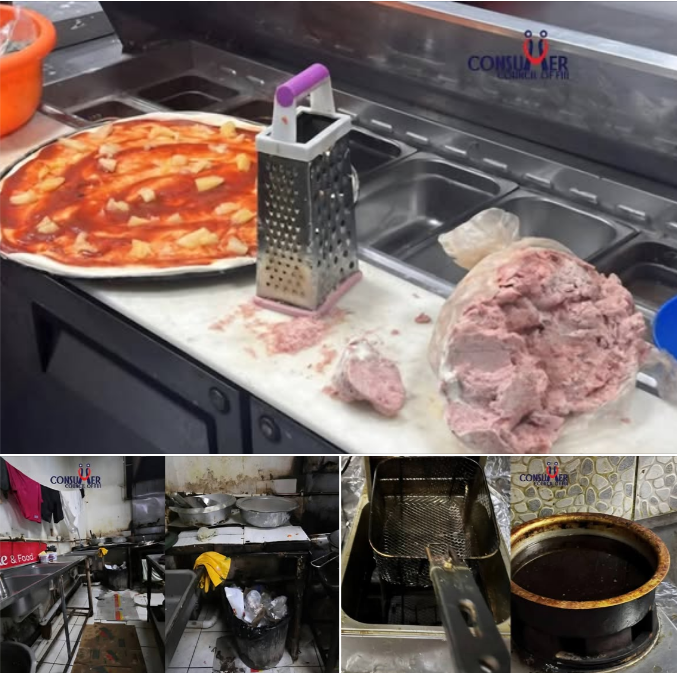
A sweeping restaurant surveillance operation has uncovered what consumer watchdogs describe as shocking and hazardous kitchen conditions — raising serious concerns about what many Fijians may be unknowingly eating.
Joint inspections carried out over the past week by the Consumer Council of Fiji and municipal health inspectors across the Nausori, Nasinu and Lami areas found that every one of the 93 restaurants surveyed was issued with at least one violation notice.
According to the Council, inspectors observed widespread hygiene failures, including grease-saturated exhaust systems dripping oil onto cooking areas, questionable meat handling practices, mould and grime on kitchen walls, and heavily reused, blackened cooking oil.
Some kitchens were also found with pests such as flies, cockroaches, rats and even cats present near food preparation zones.
Inspectors also reported cross-contamination risks, uncovered food, rotten produce, improper thawing methods, and food warmers not being used.
Several establishments lacked basic compliance requirements such as hot water, proper ventilation, clean protective equipment for staff, and valid health or business licences.
Consumer Council CEO Seema Shandil said the findings show a troubling pattern of disregard for public health.
“What we have uncovered in these kitchens is a blatant disregard for hygiene standards and for the people who pay to eat there.
When a kitchen becomes a laundry room, or black, carcinogenic oil is served as ingredients, the business has failed its most basic moral and legal obligation,” Shandil said.
She warned that existing penalties are failing to deter repeat offenders, with some operators treating fines as simply a cost of doing business.
The Council is now calling for heavier on-the-spot fines and a public ‘name and shame’ system to identify repeat violators, saying unsafe kitchens should be shut down if standards are not met.
Consumers are also being urged to take action by refusing to support visibly unhygienic food outlets and reporting concerns to authorities.
The surveillance operations are continuing, with further inspections expected in additional areas.
Duavata News (Fiji) PTE LIMITED © 2024
☏ 3317438
📧 editor@duavata.news