India’s LVM3-M6 Mission Launches Heaviest Satellite Into Space
WORLD
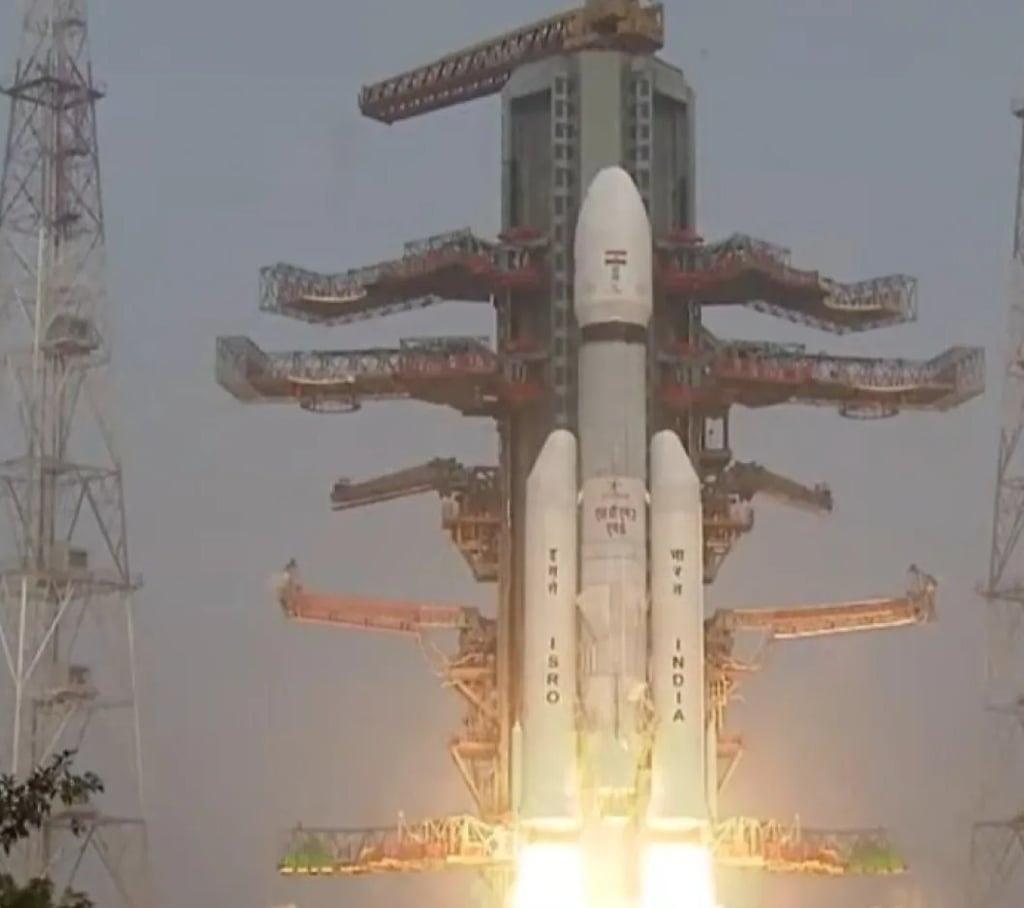
India’s space agency, the Indian Space Research Organisation (ISRO), has successfully launched the BlueBird Block-2 communications satellite on its powerful LVM3-M6 rocket from the Satish Dhawan Space Centre in Sriharikota on December 24, 2025.
The mission marks a historic achievement as the LVM3-M6 carried the heaviest commercial satellite ever lifted from Indian soil — the United States’ BlueBird Block-2, weighing approximately 6,100 kilograms into Low Earth Orbit (LEO). This also represents a significant step in India’s growing presence in the global commercial space market.
ISRO Chairman V. Narayanan described the success as a major accomplishment for the Indian launch vehicle programme, saying the mission involved placing the satellite into orbit with precision and marks the heaviest payload ever lifted from Indian soil using an Indian launcher.
Prime Minister Narendra Modi also praised the achievement, calling it a “proud milestone” for the country’s space efforts and saying that “India continues to soar higher” in its space journey.
The BlueBird Block-2 satellite was launched under a commercial contract between ISRO’s commercial arm NewSpace India Limited (NSIL) and U.S.-based AST SpaceMobile, highlighting expanding international partnerships in space and the growing demand for India’s launch services.
The LVM3 — often dubbed India’s heavy-lift workhorse — has a long record of success, including previous missions such as carrying India’s Chandrayaan lunar spacecraft and multiple commercial payloads. Its ability to lift heavy satellites is seen as critical to India’s competitiveness in the global launch services market.
This launch comes amid increasing cooperation between Indian and international space agencies. India has previously collaborated with NASA on missions such as the NISAR Earth observation satellite, a joint project between NASA and ISRO designed to monitor changes in Earth’s ecosystems and natural hazards.
India is also one of the few countries with deep space mission experience. It became only the second nation after the United States to have a spacecraft orbit Mars when its Mars Orbiter Mission (Mangalyaan) successfully reached Martian orbit in 2014 — a milestone that earned global recognition for Indian space capability.
Duavata News (Fiji) PTE LIMITED © 2024
☏ 3317438
📧 editor@duavata.news