McDonald’s CEO Hesitates to Eat McDonald’s Himself
FIJI NEWSWORLD
While Fiji remains engrossed in debates over war, drugs, and the Vuda project, the country’s biggest killer continues largely unchecked: non-communicable diseases (NCDs).
Heart disease, diabetes, and obesity are responsible for the overwhelming majority of deaths in Fiji, with unhealthy diets and high consumption of processed foods among the leading risk factors.
Fast food in particular has long been criticised by health experts for its high levels of saturated fats, sodium, and additives, all of which are linked to an increased risk of non-communicable diseases when consumed regularly.
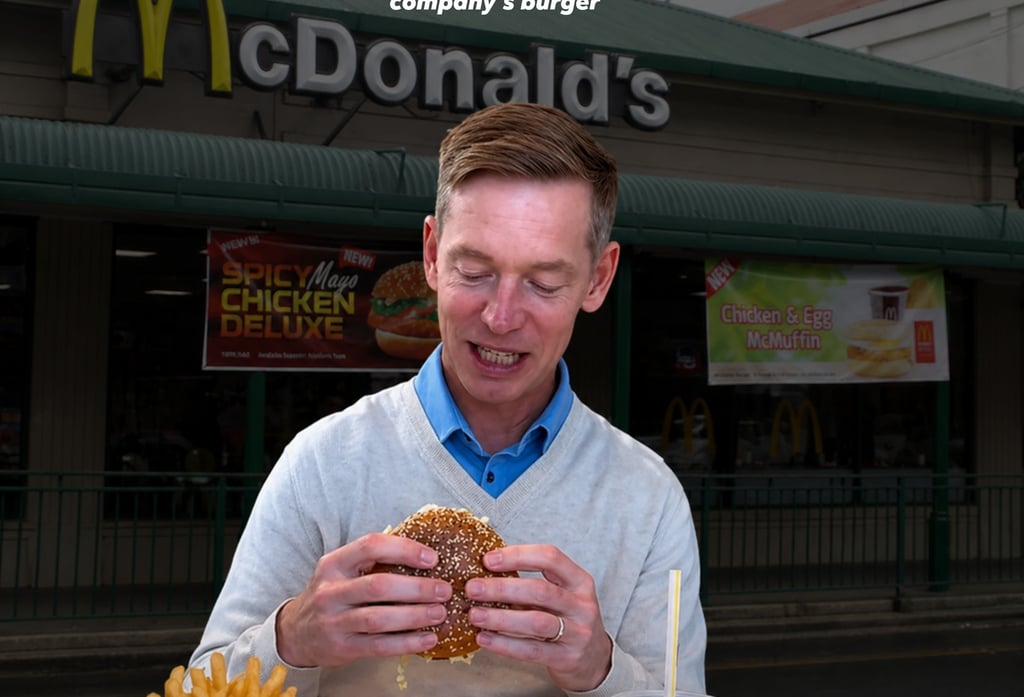
Against this backdrop, recent viral videos involving Chris Kempczinski, CEO of McDonald's, have drawn global attention, not for what he said, but for what many viewers saw as hesitation when eating the very products his company sells.
In one earlier promotional video, Kempczinski faced criticism after appearing reluctant to eat a McDonald’s burger during a staged segment, with viewers questioning his authenticity and comfort with the product.
Now, a second video has reignited the discussion. In the latest clip, the CEO takes a visibly awkward bite of a chicken nugget while speaking about the brand, with social media users again describing the moment as forced and unconvincing.
Online reactions were swift, with many pointing out the contrast between the company’s global marketing of its food and the apparent discomfort shown by its top executive when consuming it.
While the videos themselves may seem trivial, they have sparked a wider conversation about food quality, corporate messaging, and the growing scrutiny faced by fast food companies in an era where consumers are becoming more health-conscious.
For Fiji, the issue cuts deeper.
The country continues to battle one of the highest rates of NCDs in the Pacific, with diet-related illnesses placing enormous strain on families, communities, and the healthcare system.
Health authorities have consistently warned about the long-term effects of excessive consumption of highly processed foods, including those commonly found in fast food meals.
Yet despite this, fast food remains widely accessible and heavily consumed.
At a time when the health risks associated with processed food are well documented, even the face of one of the world’s largest fast food companies appears hesitant when asked to eat it on camera.
Duavata News (Fiji) PTE LIMITED © 2024
☏ 3317438
📧 editor@duavata.news