Nemani Challenges Future Leaders at Succession Program
FIJI NEWSTOP STORIES
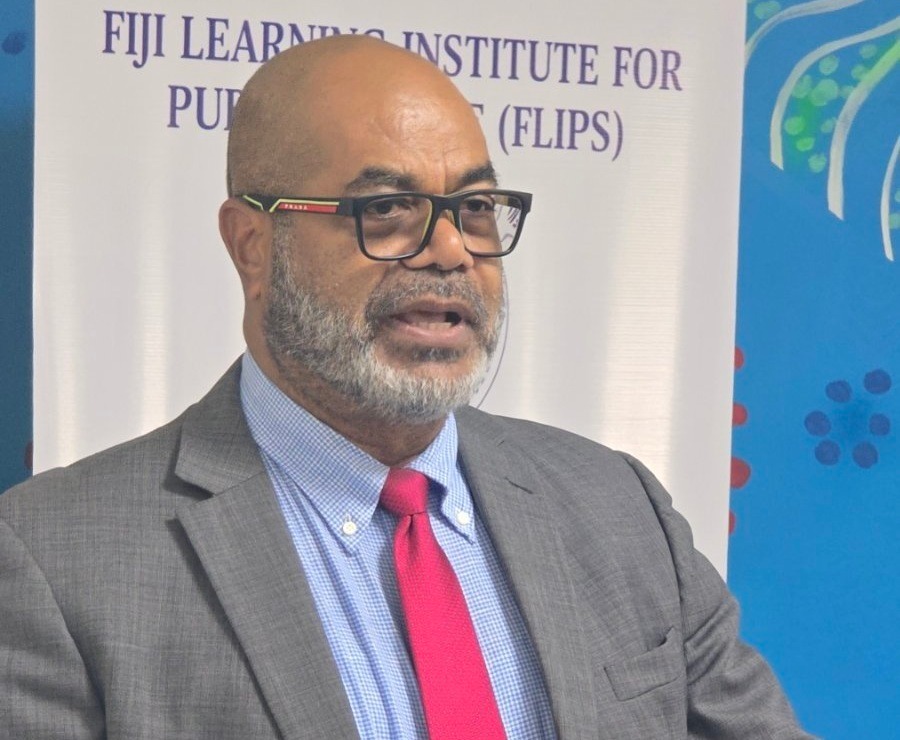
Permanent Secretary for Employment, Productivity and Workplace Relations, Jone Maritino Nemani, has issued a direct and uncompromising call for stronger leadership within Fiji’s civil service, warning that the country can no longer afford to rely on external appointments to fill its most senior roles.
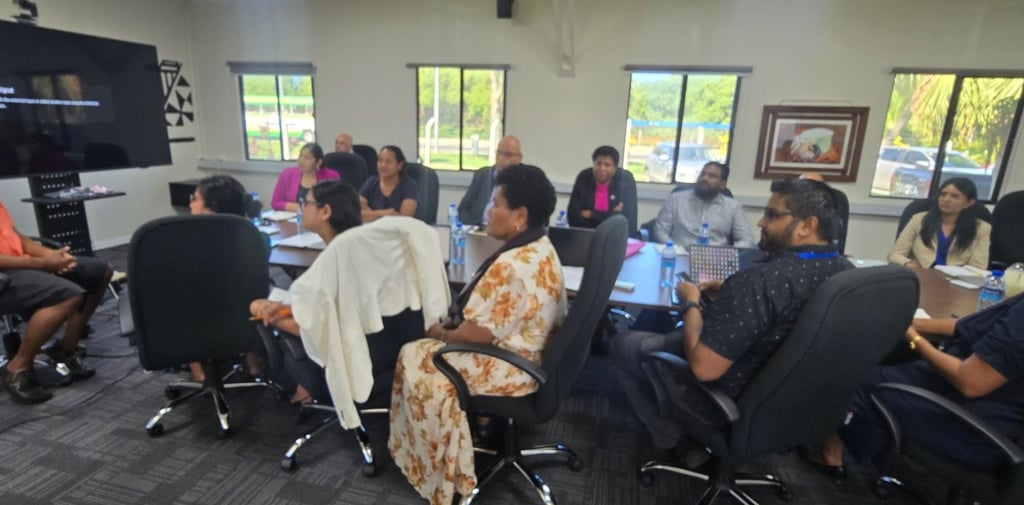
Speaking at the launch of the Succession Planning Program for Prospective Permanent Secretaries, Nemani said the initiative marks a deliberate shift toward building a capable and prepared leadership pipeline from within government.
He pointed to a growing pattern in which many recent appointments to Permanent Secretary positions have come from outside the civil service, describing it as a clear indication that more must be done to develop internal talent.
“When vacancies arise, our first answer should come from within, with leaders who are ready, tested and capable of stepping into the role without hesitation or uncertainty,” Nemani said.
He stressed that the program is not about titles or promotion, but about preparing individuals for the realities of leadership at the highest level of government.
“A Permanent Secretary must be adaptable, able to move from one ministry to another, from technical areas into complex policy spaces, and still deliver with confidence and clarity in environments that may be completely unfamiliar,” he said.
Nemani said leadership at this level demands courage, particularly when providing advice to political leaders.
“You must be bold enough to give your Minister the advice they need to hear, not the advice they want to hear, and fearless enough to stand by decisions that are right, even when they are unpopular or difficult to defend,” he said.
In one of the strongest parts of his address, Nemani outlined behaviours that should disqualify individuals from leadership, warning that such actions undermine both governance and public trust.
“When legal advice is ignored, when due process is bypassed, and when relevant ministries and partners are not consulted before significant decisions are made, the consequences do not fall on one person, they fall on the institution and on public confidence in the civil service,” he said.
He also raised concerns about deeper cultural issues within organisations, including entitlement and the misuse of authority, stressing that these are often made worse rather than corrected at senior levels.
“These behaviours are not corrected by promotion. They are amplified by it, and if they are not addressed early, they become embedded in the way leadership is exercised at the highest levels,” Nemani said.
Nemani warned against passive leadership, describing the tendency to avoid difficult decisions as one of the most damaging failures in public service.
“A leader who chooses to do nothing controversial, who avoids scrutiny and allows issues to go unaddressed, is not exercising caution; that is an abdication of leadership and responsibility,” he said.
While placing high expectations on future leaders, Nemani acknowledged that the government must also play its part by investing in training, professional development, and exposure to international best practices.
“High standards without the support to meet them are not a framework; they are simply expectations without a foundation, and government has a responsibility to ensure that leaders are equipped to succeed,” he said.
He emphasised that leadership ultimately comes down to character, not position.
“It cannot be legislated, it cannot be conferred by appointment — leadership is defined by who you are when no one is watching, and it must be chosen every day in every decision you make,” Nemani said.
Closing his address, Nemani challenged participants to treat the program as preparation for real responsibility, not ceremony.
“Fiji’s civil service needs its best leaders ready, not at some point in the future, but now, and that responsibility begins with each of you in this room,” he said.
Duavata News (Fiji) PTE LIMITED © 2024
☏ 3317438
📧 editor@duavata.news