New Power Tariffs Will Affect Consumers Contrary to FCCC Claims
FIJI NEWS

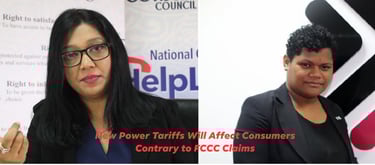
The Consumer Council of Fiji has warned that ordinary consumers will still feel the impact of the new electricity tariffs, despite assurances from the Fijian Competition and Consumer Commission Competition and Consumer Commission (FCCC) that low-usage households will not be affected.
In a media release issued following FCCC’s announcement of revised electricity tariffs for Energy Fiji Limited (EFL), the Consumer Council cautioned that higher electricity costs for businesses are likely to be passed on to consumers through increased prices for everyday goods and services.
While FCCC has stated that domestic consumers using up to 100 kilowatt hours per month will see no change to their electricity bills, the Consumer Council said electricity is a key operating cost for businesses and warned that any increase in tariffs can flow directly into the cost of living.
Consumer Council Chief Executive Officer Seema Shandil said that electricity price increases, even when targeted at higher-usage or commercial customers, have wider consequences for consumers.
“As electricity costs rise for businesses, there is a very real risk that these increases will be passed directly on to consumers,” Ms Shandil said.
She said this could result in higher prices for food, transport, accommodation, and essential services, placing further pressure on households already struggling with rising living costs.
The Consumer Council also raised concerns about the level of consultation prior to the tariff changes, saying consumers and businesses were not adequately prepared for the increase and calling for stronger accountability and monitoring to ensure costs are not unfairly transferred to consumers.
In contrast, FCCC has defended the tariff decision, saying the revised structure balances affordability with the need for long-term investment in energy security and renewable infrastructure.
FCCC Chief Executive Officer Senikavika Jiuta said the review process was conducted to ensure electricity prices remain fair and affordable, while allowing necessary investment to maintain a reliable supply.
Ms Jiuta had stated that the tariff structure ensures no change for low-usage domestic consumers and that the majority of lower-income households will not see an increase in their electricity bills.
However, the Consumer Council’s warning highlights a broader concern that even if household electricity bills remain unchanged, consumers may still face indirect cost increases as businesses adjust prices to absorb higher operating expenses.
The Consumer Council has called for transparency in how additional revenue generated from the tariff increase is used and urged authorities to closely monitor pricing behaviour to protect consumers from unjustified price hikes.
Duavata News (Fiji) PTE LIMITED © 2024
☏ 3317438
📧 editor@duavata.news