Personal Attacks Unacceptable in Vuda Debate, Says Leung
FIJI NEWSTOP STORIES
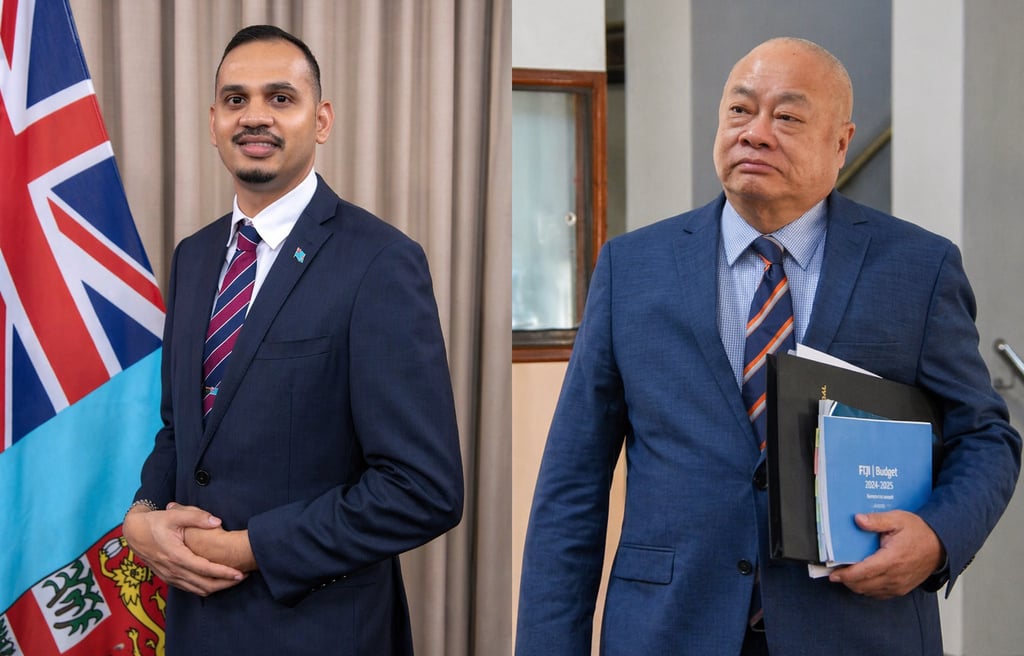
Former Attorney-General Graham Leung has pushed back strongly against personal attacks directed at the Permanent Secretary for Environment and Climate Change, Dr Sivendra Michael, warning that such criticism reflects a misunderstanding of the environmental laws governing development proposals such as the Waste to Energy proposed project in Vuda.
Leung, who confirmed he has formally objected to The Next Generation Pte Ltd’s proposed project, said while public concern and opposition are valid, the debate must remain grounded in facts and an accurate understanding of how environmental approvals are obtained, including the vested powers in the director and the permanent secretary.
He expressed disappointment that criticism of the project has extended to attacks on the integrity of the Permanent Secretary, describing such claims as misplaced and unfair when he had been consistent in explaining the EIA process and how decisions are made for any development undertaking in Fiji.
Leung explained that under Fiji’s environmental laws, the process is structured as a technical and staged system led by the Director of Environment or the EIA Administrator, who are responsible for assessing applications, determining whether a full EIA is required, and ultimately approving or rejecting reports.
“The Permanent Secretary does not participate in this decision-making chain at first instance,” he said, noting that the law does not give the PS authority to approve, reject, or intervene in the assessment of an application.
Instead, Leung said the permanent secretary becomes involved only where a determination is challenged, therefore acting as an appellate authority reviewing the decision already made.
He further stressed that once an application is properly submitted, authorities are legally required to process it.
“It cannot be refused on subjective grounds… the process must commence,” he said, highlighting that the system is designed to ensure consistency, transparency, and due process.
According to Leung, this legal framework exists precisely to prevent arbitrary decision-making and to ensure that environmental approvals are based on technical evidence, expert review, and public consultation, not individual discretion.
He outlined that the process includes mandatory stages such as scoping, preparation of an EIA report, independent technical review, and public consultation, where members of the public are given the opportunity to examine proposals and submit objections within set timeframes. Leung said this structure ensures that decisions are made based on evidence and law, rather than pressure or public sentiment alone.
While making it clear that he himself opposes the Vuda project, Leung said it is important to distinguish between challenging a proposal and undermining the integrity of public officials.
“In a democracy, the right to dissent is healthy… however, let us endeavour, when we differ, to do so without rancour," he said.
Adding to the discussion, McDonald’s Fiji Director Marc McElrath also weighed in, praising the conduct of Dr Michael and his knowledge of the EIA process.
“Dr Michael has done an outstanding job through the whole process. He has been very balanced and thorough and has been fair to all sides from what I have seen so far,” McElrath said.
“We are fortunate to have an individual of this calibre undertaking this review. For all the critics out there, take a step back and put yourself in his shoes. It is a controversial project, no doubt, and will be challenged regardless of which way it goes. He is simply doing his job to ensure that when this happens, all areas have been properly considered.”
Many others have joined Leung in calling out individuals hastily labelling Dr Michael as “just an economist” or "biased" without any understanding of his qualifications, technical background, or professional experience he brings to the field. Such remarks, they say, reflect a broader issue of misinformation and a growing tendency to undermine public officials without first establishing the facts.
Duavata News (Fiji) PTE LIMITED © 2024
☏ 3317438
📧 editor@duavata.news