Stop Diluting Kava with Flour, Warns Consumer Council
FIJI NEWS
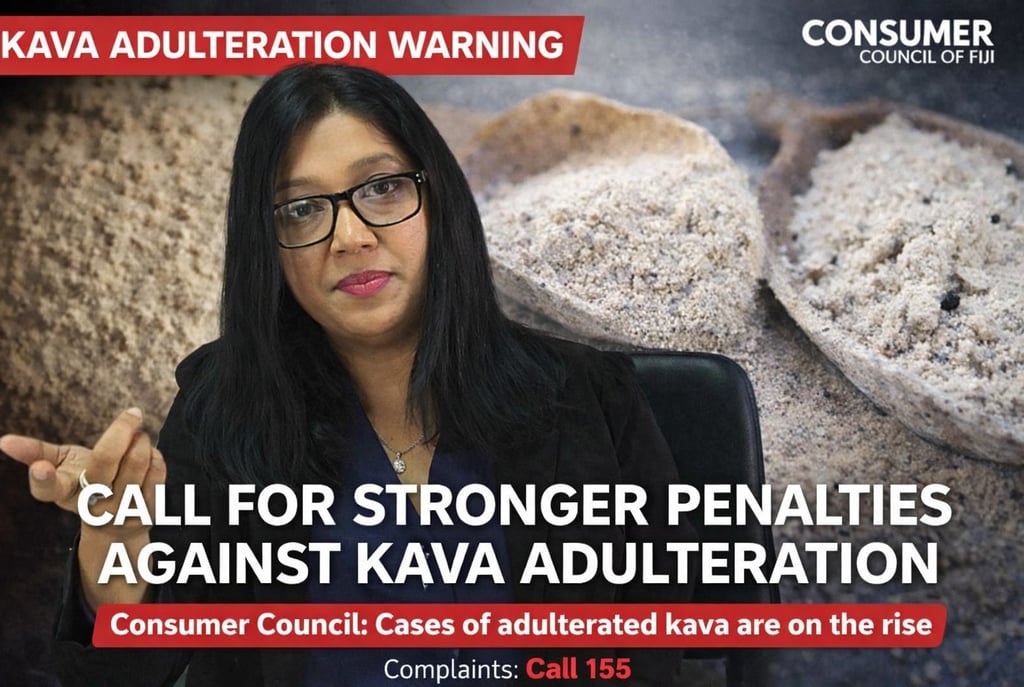
The Consumer Council of Fiji is calling for tougher enforcement and penalties against kava adulteration following continued complaints from consumers and small businesses about compromised product quality.
In a statement released today, the Council said concerns have increased after the Ministry of Agriculture recently warned that some kava products have been mixed with cooking ingredients such as flour, particularly in products intended for export. Authorities say this practice risks damaging Fiji’s reputation in the global kava market.
The Council highlighted a recent complaint involving a kava dealer at the Suva Municipal Market, where a Beqa-based small business owner reported that the kava she purchased appeared unusually powdery and produced a white sediment when mixed with water. She only discovered the issue after reselling the product to her own customers.
Following the complaint, the Consumer Council conducted its own comparison tests using other kava samples as a control. According to the Council, the suspected product differed in both appearance and smell. While standard samples produced the usual light brown colour, the questionable batch appeared pale grey with visible white powder and black specks — signs it may have been mixed with other substances.
Consumer Council CEO Seema Shandil said the case is not isolated, noting that the Council has received numerous complaints over time, including from overseas buyers, about kava with unusual taste, odour, and appearance. The Council says it supports the Ministry of Agriculture’s call for stricter quality controls by farmers, traders, and exporters.
With consultations underway on the proposed Kava Bill, the Council is urging that the new law include stronger deterrents, including higher fines and license blacklisting for those found guilty of adulteration.
Consumers are being advised to buy only from reputable vendors and to report suspicious kava products through the Council’s toll-free National Consumer Helpline 155.
Duavata News (Fiji) PTE LIMITED © 2024
☏ 3317438
📧 editor@duavata.news