

Pacific Intelligence Report Warns of Foreign Influence Over Telecommunications Networks
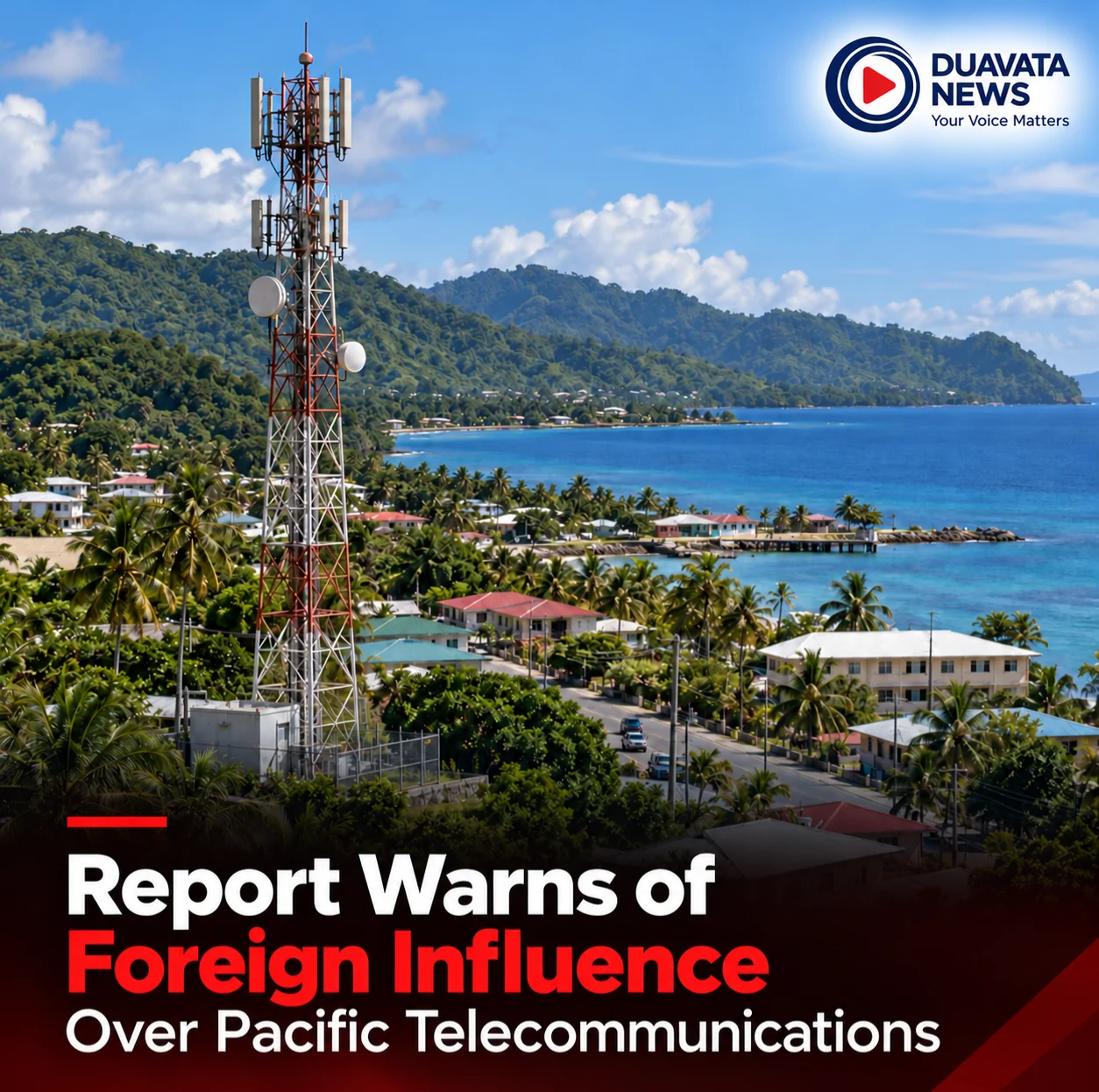
A new strategic intelligence report by the Pacific Fusion Centre has warned that growing competition between China, Australia, the United States and Japan over telecommunications infrastructure could threaten the digital sovereignty of Pacific Island nations, including Fiji.
The October 2026 report, titled Geopolitics and Pacific Telecommunications, identifies telecommunications infrastructure as an increasingly important battleground for geopolitical influence.
According to the report, foreign powers are using investments in undersea internet cables, mobile networks, satellites and data centres to strengthen their strategic presence across the Pacific.
It warns that these developments could undermine the region’s longstanding foreign policy approach of being “friends to all, enemy to none.”
Fiji is specifically mentioned in relation to Digicel Pacific, which the report states previously relied heavily on Chinese telecommunications giant Huawei’s equipment, particularly in Fiji and Papua New Guinea.
Following Digicel Pacific’s acquisition by Australian telecommunications company Telstra in 2022, supported by Australian Government financing, Huawei equipment is being progressively replaced with alternatives such as Nokia.
The report describes the acquisition as an example of the growing geopolitical competition between major powers seeking to secure influence over critical telecommunications infrastructure.
It also highlights the 2026 Fiji–Australia Vuvale Union, which contains provisions concerning engagement with third parties in critical infrastructure and technology, including telecommunications and digital networks.
The Pacific Fusion Centre warns that excessive dependence on a single foreign technology provider could expose countries to security vulnerabilities, limit their independence and potentially create opportunities for espionage.
As an example, it points to serious cybersecurity weaknesses identified in a Huawei-built national data centre in Papua New Guinea, including inadequate firewalls and outdated encryption.
The report does not suggest that Fiji’s telecommunications networks have been compromised, but emphasises the importance of protecting sensitive government, commercial and personal information.
It calls on Pacific governments to strengthen cybersecurity safeguards, diversify technology partnerships and ensure they retain control over critical digital infrastructure.
The Pacific Fusion Centre concludes that competition over telecommunications infrastructure is likely to intensify, with Pacific nations facing increasing pressure to balance foreign investment against national security and sovereignty.
The Centre says the ultimate challenge will be ensuring that the Pacific determines its own digital future rather than allowing external powers to dictate it.
More from Duavata

PM Rabuka Urges Public to Speak Freely on Constitution Bill

Vosarogo Accuses SODELPA of ‘Technical Amnesia’

Ketan Could Still be “Crowned King” Despite High Court Rejection

Constitution Bill Failure Could Break Up Coalition, Says Rabuka